A comparison of AI models
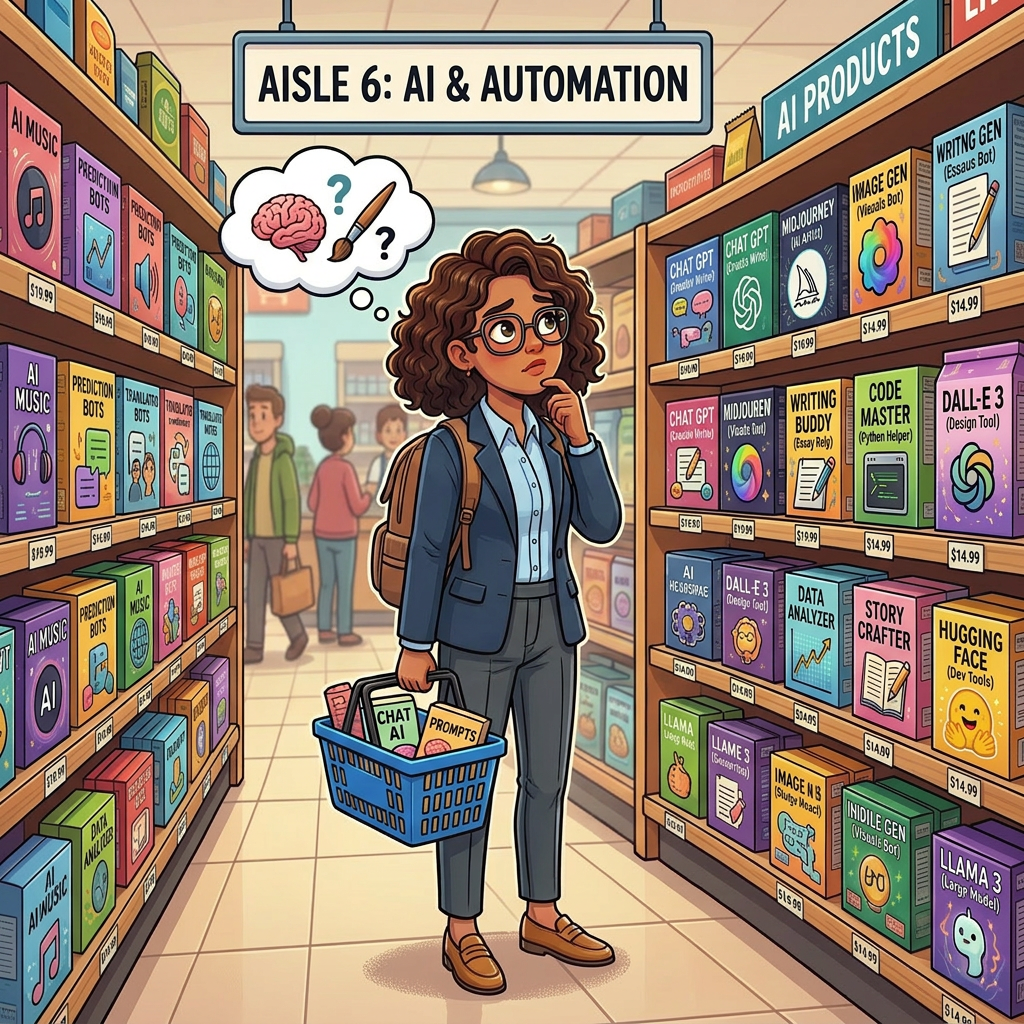
Most people think AI chatbots are like different brands of the same product, like choosing between Pepsi and Coke. They’re not.
Under the hood, each major AI model was built with a different philosophy, different training methods, and different priorities. That’s why the same question can give you wildly different answers depending on which one you ask. Here’s a breakdown of the big players and what actually makes them different.
ChatGPT (by OpenAI) — The Generalist
ChatGPT is built on OpenAI’s GPT series of models (currently GPT5.5). It was trained on an enormous dataset of internet text, books, and code, then refined using a technique called RLHF, or Reinforcement Learning from Human Feedback. In simple terms, human trainers rated its responses and the model learned to produce answers those trainers preferred. The result is a highly versatile, conversational model that’s adept at writing, coding, analysis, and brainstorming. It’s the Swiss Army knife of AI, and its broad plugin and tool ecosystem makes it especially powerful for developers and power users who want to extend what it can do.
ChatGPT is the AI version that most people think of when the subject comes up, as it was the first one to really break into popular usage.
Claude (by Anthropic) — The Safety-First Thinker
Claude was built by Anthropic, a company founded specifically around AI safety. Its core differentiator is something called Constitutional AI. Instead of only learning from human preferences, Claude was trained against a set of defined principles (a kind of internal code of ethics) that guides it to be helpful, harmless, and honest.
Think of it this way: ChatGPT learned from what humans liked. Claude was also taught what it should value. This makes Claude more cautious, more nuanced, and more willing to say “I’m not sure.” That can make it seem more trustworthy, especially when working on sensitive or complex topics. It also boasts one of the largest context windows in the industry, meaning it can read and reason over extremely long documents in a single session.
One of the main fields of endeavor that Anthropic has been pushing Claude into has been the world of finance. Nicholas Lin, Anthropic’s head of product for financial services, is on record as wanting to make Claude the go-to for companies such as Dun and Bradstreet and JP Morgan Chase.
Gemini (by Google DeepMind) — The Multimodal Native
Gemini is Google’s flagship AI and its standout feature is that it was built on Google’s massive bank of text, images and user behavior patterns. It was designed from the ground up to understand and reason across text, images, audio, video, and code all at once.
This gives Gemini a structural edge in tasks that blend different types of information, like analyzing a chart while discussing a document. It’s also deeply integrated into Google’s ecosystem across Search, Docs, and Gmail. Just having it so prominent on Android phones gives it an advantage.
Grok (by xAI) — The Real-Time Rebel
Grok, built by Elon Musk’s xAI company, takes a noticeably different approach. It’s trained with access to real-time data from X (formerly Twitter), making it uniquely current compared to models that stop learning at a fixed point in time.
Its design philosophy leans toward being less restricted and more direct, and it’s often more willing to engage with unconventional or edgy questions. However, Grok has developed a bad reputation due to some of its users utilizing it to create deepfake content, including controversial and even pornographic materials. And to date, the designers seem to have little appetite to do anything about that. Its regulatory “wild West” mentality is garnering more and more distaste in Europe, the UK and several Asian countries.
Microsoft Copilot — The Enterprise Integrator
Copilot is less of an independent AI model and more of an AI layer built on top of OpenAI’s models, woven deeply into Microsoft 365 across Word, Excel, Teams, and Outlook. Its power isn’t really in the model itself — it’s in the context. Copilot can access your emails, documents, and calendar to give you genuinely personalized assistance. For businesses already running on Microsoft’s stack, it can fundamentally change how work gets done day to day. There are questions, though, about Copilot’s future, as it has struggled to attain the same level of popularity as ChatGPT or Grok. Microsoft recently announced that they are cancelling Copilot’s planned inclusion within its Xbox gaming consoles.
So which one is “best”?
Honestly, that’s the wrong question. The better question is best for what? If you need a versatile all-rounder, ChatGPT is hard to beat. If you’re working with long documents or sensitive topics, Claude’s thoughtful approach shines. If you’re blending text, images, and live data, Gemini has a structural advantage. If you want real-time and unfiltered, Grok is your pick. And if you live inside Microsoft 365, Copilot will change your workflow entirely.
These models aren’t competing to be the same thing. Each one is making a different bet on what AI should prioritize, and those bets shape everything about how they behave.
The smartest move right now? Don’t be loyal to one. Learn which tool fits which job. And if you don’t have time for a learning curve, trust Rocket Internet to do it for you! We sell a Private AI cloud that gives you access to all the models at once. Rather than be restricted to one model, you can have access to the best tool for your job. This is made even easier by the auto-LLM setting that will pick the most appropriate model for the task you are working on. We make it just that easy!